Do Homeschool Field Trips Count as School Hours?
The Short Answer: Yes, Usually
If you're wondering whether that homeschool field trip to the science museum or the afternoon spent at a historical battlefield "counts" as school, the answer in most states is yes. Field trips are legitimate instructional time. The key is knowing what your state requires and documenting it properly.
I remember worrying about this during our first year of homeschooling. We'd spend a whole Tuesday at a nature preserve and I'd think, "Did we do school today?" We absolutely did. The kids learned more about ecosystems in three hours of hiking and creek-stomping than they would have from a week of textbook chapters. But I still felt guilty because it didn't look like "school."
That guilt fades once you understand the rules. Let's break it down.
What Counts as Instructional Time
Most states define instructional time broadly. It's not limited to sitting at a desk with a textbook. Instructional time generally includes any activity where learning is happening with intent. That last part matters. Watching TV on the couch probably doesn't count. Watching a documentary on the Roman Empire and then discussing it over lunch probably does.
Field trips fall squarely into instructional time when they connect to what your kids are learning. And honestly, even when they don't directly connect to a current unit, the learning that happens is real. A trip to a local farm teaches biology, economics, nutrition, and life skills all at once.
Here are some field trip examples and the subjects they cover:
Science museum or planetarium: Science, technology, math
Historical site or battlefield: History, geography, civics
Art museum: Art, history, cultural studies
Nature preserve or state park: Biology, ecology, physical education
Local business tour (bakery, fire station, factory): Career exploration, economics, community studies
Farmers market: Math, nutrition, economics, social skills
Concert or theater performance: Music, drama, literature
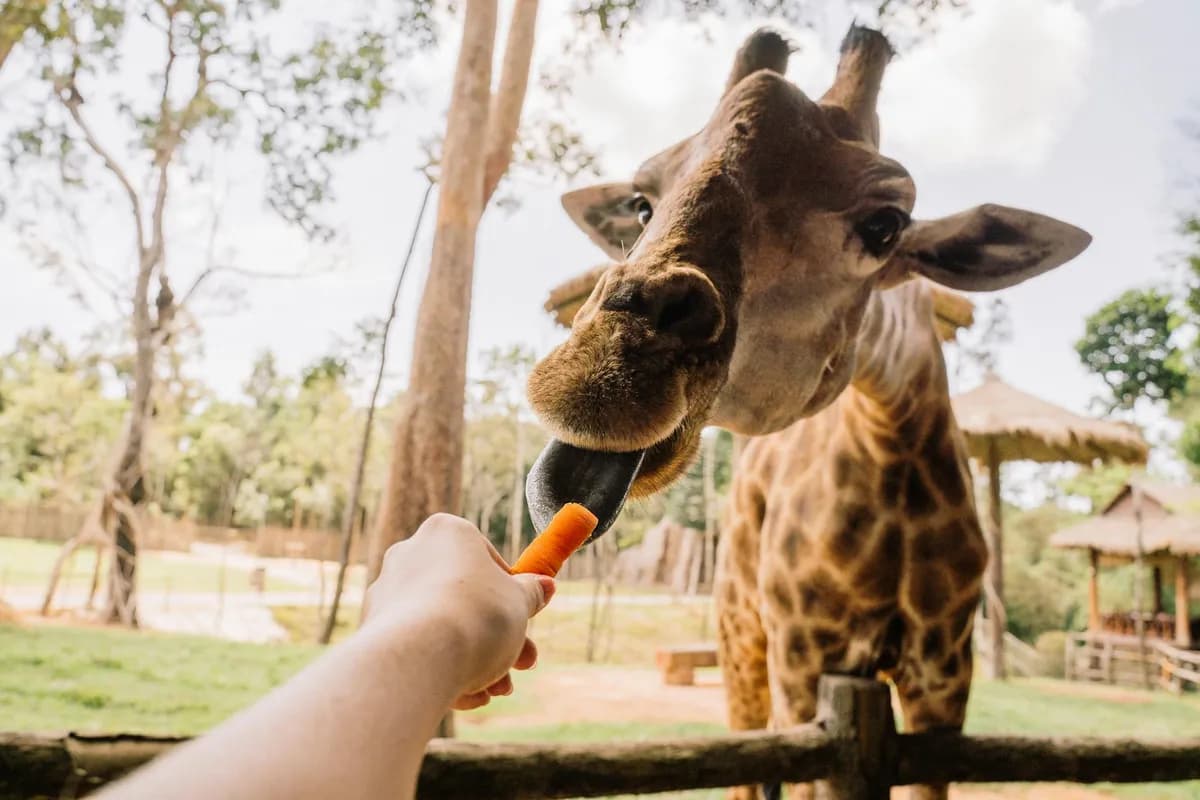
Zoo or aquarium: Biology, conservation, geography
If your kids are learning, it counts. Period. The format of the learning doesn't matter nearly as much as the substance.
State-by-State Considerations
Homeschool laws vary significantly by state, and this includes how (or whether) you need to track instructional hours. Here's a general breakdown:
States with hour requirements. States like Pennsylvania (180 days or 900/990 hours), New York (900/990 hours), and Ohio (900 hours) require you to log a specific number of instructional hours per year. In these states, field trips count toward your hours as long as the activity is educational. You should log them just like any other school day.
States with day requirements. Some states, like Virginia (180 days) and Washington (180 days for part-time; 1,000 hours for full-time), count by days rather than hours. A field trip day is a school day. Log it as such.
Low-regulation states. States like Texas, Alaska, and Idaho have minimal reporting requirements. In these states, you generally don't need to track hours at all, so the question of whether field trips "count" is somewhat irrelevant. You're in charge of your own program.
States requiring subjects. Some states specify that certain subjects must be taught (like math, English, science, and social studies). Field trips can cover these subjects. A trip to a historical site covers social studies. A nature hike covers science. Just be intentional about connecting the trip to the required subjects in your records.
Always check your specific state's current homeschool laws. The HSLDA website and your state's homeschool association are good starting points. Laws change, so verify annually.
How to Document Field Trips
Documentation is where a lot of homeschool parents drop the ball. Not because they're lazy, but because they don't know what's expected. Good news: it doesn't need to be elaborate.
Here's a simple documentation approach that works in any state:
Log the date, location, and duration. "October 15, National Air and Space Museum, 10 AM to 2 PM (4 hours)." That's your baseline.
Note the subjects covered. "Science (aerodynamics, space exploration), History (Wright Brothers, Apollo program), Math (calculating distances, scale models)." You don't need to write an essay. A bullet list is fine.
Take photos. Photos are documentation gold. A picture of your kid reading a museum placard, examining a tide pool, or sketching a historical building tells the story better than any written log.
Save any materials. Brochures, worksheets from the venue, ticket stubs, maps. Toss them in a folder. If you ever need to show evidence of instruction, this stuff speaks for itself.
Have kids write or narrate about the trip. A short journal entry, a drawing, or even a verbal summary you jot down. This shows processing and retention, which is the whole point of education.
Some families keep a dedicated field trip binder. Others use a simple spreadsheet. Others snap a photo and add a note in their phone. Any system is fine as long as you're consistent.
What Probably Doesn't Count
Let's be honest about the gray areas. While the definition of "educational" is broad, there are some activities that would be a stretch to log as instructional time:
A trip to an amusement park without any educational component. (But if you're teaching physics through roller coasters, go for it.)
Running errands. Grocery shopping can teach math, budgeting, and nutrition, but only if you're actually using it as a teaching moment, not just grabbing milk.
Passive screen time. Watching a movie for fun isn't a field trip. Watching a film adaptation of a book you're studying and then comparing the two? That's instruction.
The line is intent and engagement. If learning is happening and you can articulate what was learned, it counts. If you're stretching to justify it, it probably doesn't.
Making Field Trips More Effective
A few tips to get more educational value out of your trips:
Prep before you go. Read about the place. Watch a short video. Look at a map. Even 15 minutes of prep dramatically increases what kids absorb during the visit.
Give kids a focus question. Instead of "look at everything," try "find three things that surprised you" or "what was life like for a soldier at this fort?" A focused question turns passive observation into active learning.
Debrief afterward. Talk about what you saw. Ask what they liked, what confused them, what they want to learn more about. This is where the deepest learning happens, and it takes five minutes in the car on the way home.
Go with other families. Group field trips are more fun and create opportunities for kids to discuss what they're learning with peers. Many homeschool groups organize regular field trips, and venues often give group rates for 10+ people.
Go back. Kids (and adults) don't absorb everything in one visit. Repeat visits to the same museum, park, or site deepen understanding each time. A membership to your local science museum or zoo pays for itself if you go three times a year.
The Real Question
Here's what I've come to believe after several years of homeschooling: the question "does this count as school?" is the wrong question. The better question is "are my kids learning?"
If you're standing in a tide pool identifying sea creatures, your kids are learning marine biology. If you're touring a Civil War battlefield, they're learning history in a way no textbook can match. If you're baking bread at home and measuring ingredients, that's math and science and life skills.
Document it. Log it. Check your state's requirements and make sure you're in compliance. But don't let paperwork anxiety keep you from giving your kids the experiential education that is one of homeschooling's greatest advantages.
The world is your classroom. That's not a bumper sticker. It's literally true, and the law in most states recognizes it. Get out there and find your next field trip.
Every state handles instructional hours differently. HSLDA's state law reference is the most reliable source for your state's specific documentation requirements.
Homeschool Hive
Homeschool Hive is a community marketplace where homeschool parents discover local homeschool groups, classes, and events all in one place. Get clear details, RSVP fast, and keep everything organized in one calendar you can actually trust.


